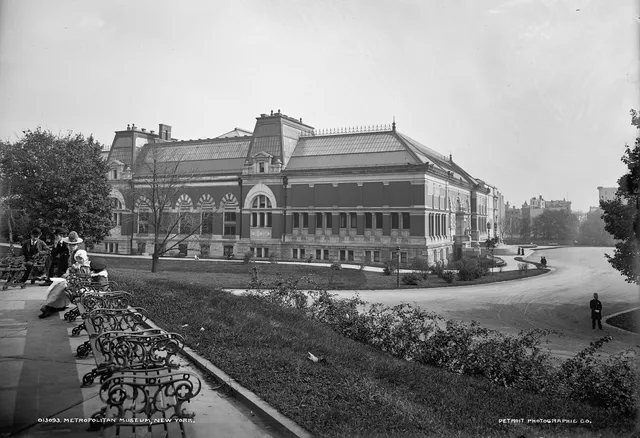
 Field Trip 1 · Saturday, 6 February 2027The Met: Orientalism, Between Fact and FantasyWith a curator, through the Met’s first exhibition on Orientalism (12 June 2026 to 28 February 2027).Metropolitan Museum, New York, about 1900. Detroit Publishing Company; Library of Congress. Public domain. · Source
Spring 2027 · Graduate seminar · New York UniversitySpring 2027 · Graduate seminar · NYU
Archiving the Middle East
Histories, Technologies, Methods
The course
What is an archive? Whose archives count? What does it mean to activate collections for different audiences, and how has the Middle East been archived and represented? This graduate seminar sits at the intersection of Middle East studies, museum practice, and critical archival theory, examining archives not as neutral repositories of the past but as active infrastructures that shape what histories are preserved and how knowledge about a region is circulated.
Students move between the imperial and the intimate: between Ottoman bureaucratic records and immigrant NYC family photographs, between the Met’s exhibition galleries and a personal box of unsorted documents. Hands-on work is not supplementary to that inquiry...it is how the inquiry happens!
The archive is not only a building. Cities are archives. Databases and websites can be archives. Community organizations that have spent decades documenting their own history outside any institutional framework are archives. The fourteen sessions are organized in five clusters:
- I. What is an archive, and who does the work?
- II. Expanding the archive
- III. Displacement and the diaspora archive
- IV. AI, description, and the politics of metadata
- V. Activating the archive
We also will have (3) optional Saturday field trips, (3) in-class hands-on archives, and (2) adjacent Archives in Dialogue events. The seminar meets on Wednesdays, 5:00 to 8:00 pm, from 20 January to 28 April 2027 in the Ettinghausen Library, Kevorkian Center, 255 Sullivan Street. It is taught by Roxana-Maria Arăș and Jared McCormick.
Archiving the Middle East: Histories, Technologies, Methods
What is an archive, and who does the work?
This opening cluster lays the theoretical and material foundations of the course. What counts as an archive? Whose power shaped it? And who are the people who show up every day to maintain it? An archive is never a neutral repository. Historical circumstances, environmental conditions, and the people who decide what to keep, how to describe it, and who may see it shape it.
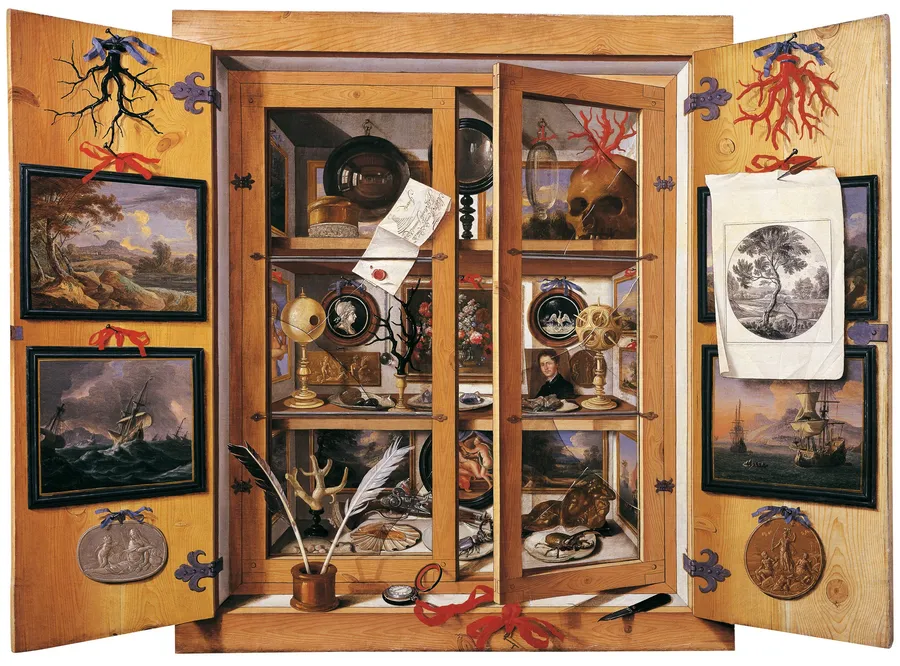
01 Power, absence, and the Middle East 02 Orientalism and the colonial archive 03 Who does the work? Archival labor and professional practice The Met: Orientalism, Between Fact and FantasySaturday, 6 February 2027 · Field Trip 1 Cabinet of Curiosities, 1690s. Museo dell’Opificio delle Pietre Dure, Florence. · Source Expanding the archive
Archives do not live only in institutions. Cities, communities, families and bodies are all layered, contested and partially legible. This cluster moves from the museum to urban space to the intimate scale of personal collections.
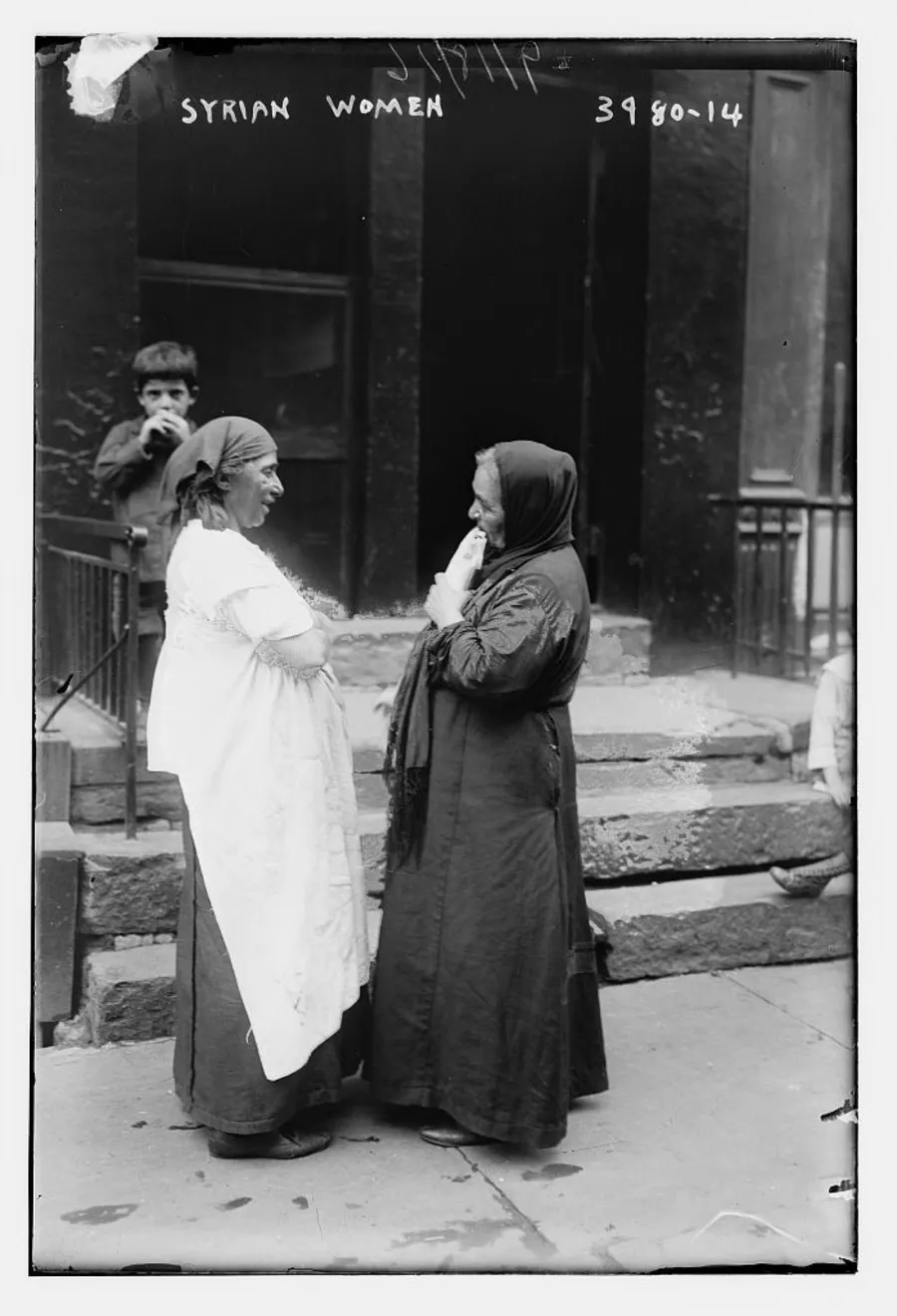
04 The museum as archive, and its histories 05 Cities as archives 06 Families and the intimate archives Spring Event 1Archives in Dialogue Event #1 · Date TBD 07 Counter-archives and community archives The Center for Brooklyn HistorySaturday, 6 March 2027 · Field Trip 2 The Jack Shaheen ArchiveHands-on Archive 1 Syrian women, 18 September 1916. Library of Congress. · Source Displacement and the diaspora archive
What happens to archives and memory when communities are forcibly displaced. The most historically specific cluster in the course, and the one most directly tied to fieldwork and community engagement in New York.
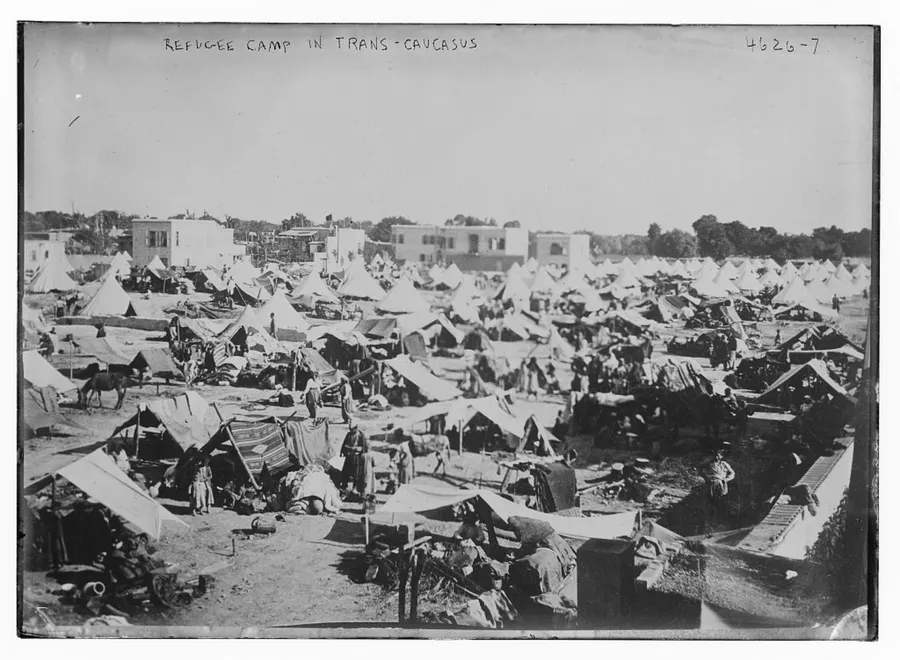
08 Dispossession, diaspora, and the scattered archive 09 Precarity, testimony, and the limits of the archive Spring Event 2Archives in Dialogue Event #2 · Date TBD [Armenian refugees in Relief Committee tents, Aintab], 24 June 1909. Library of Congress. · Source AI, description, and the politics of metadata
The AI/digital thread moves to the foreground. What does it mean that the tools being used to make MENA archives more accessible were built on datasets that misrepresent the region, and who decides how they are used? This comes before the activation work so that students first grapple with what AI does and does not (cannot or should not) do.
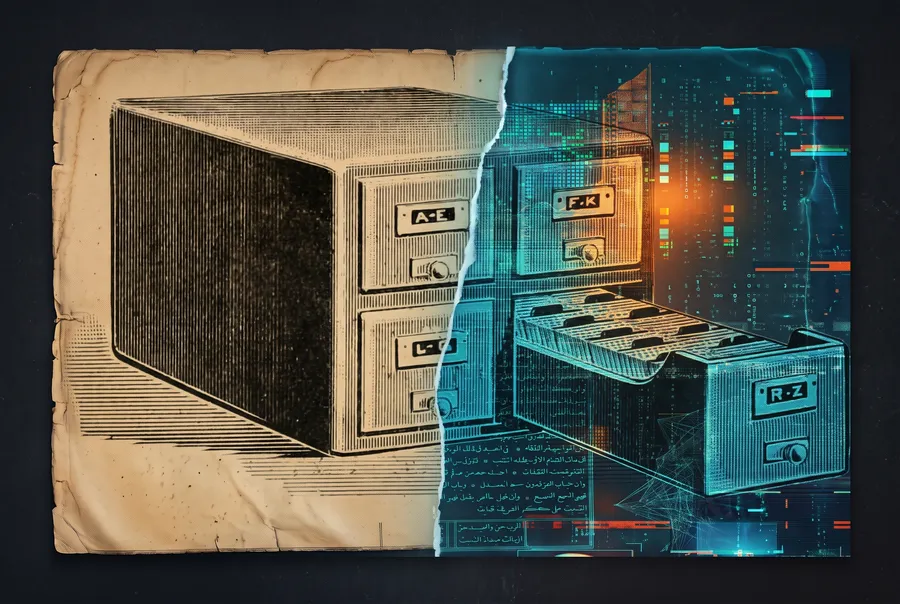
10 Digital afterlives of colonial archives View from the ViewHands-on Archive 2 11 Digitization, access, and new gatekeepers 12 “Fake” archives and ethical stakes A walking tour in Little SyriaSaturday, 17 April 2027 · Field Trip 3 Card catalog, from page 167 of Manual of Library Classification and Shelf Arrangement, 1898. Wikimedia Commons. · SourceGenerated with Google Gemini from this engraving, on the themes of the cluster. Its Arabic is the model’s own and unreadable. Activating the archive
The last two sessions turn to translating archival knowledge across audiences and media, and to making an exhibition’s argument explicit.
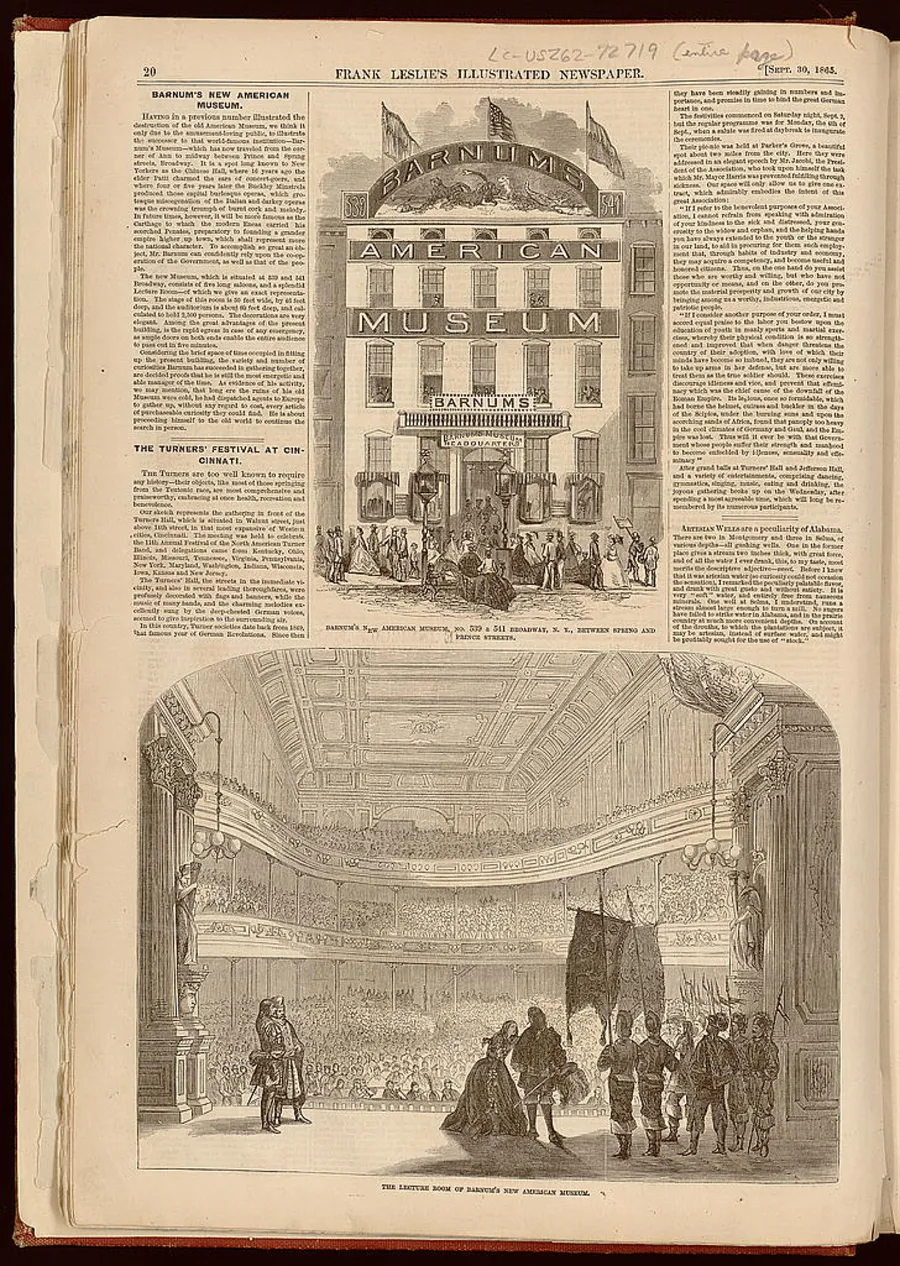
13 Translating knowledge across audiences 14 Exhibition design as argument Barnum’s new American museum, and its lecture room, 30 September 1865. Library of Congress. · Source
Field Trips
Three opportunities to go into the city and think, move and observe. These are optional, but highly suggested half-Saturday group trips. They are designed to connect with the corresponding cluster of class sessions to enliven the topics at hand.
Field Trip 1 · Saturday, 6 February 2027The Met: Orientalism, Between Fact and FantasyWith a curator, through the Met’s first exhibition on Orientalism (12 June 2026 to 28 February 2027).Metropolitan Museum, New York, about 1900. Detroit Publishing Company; Library of Congress. Public domain. · Source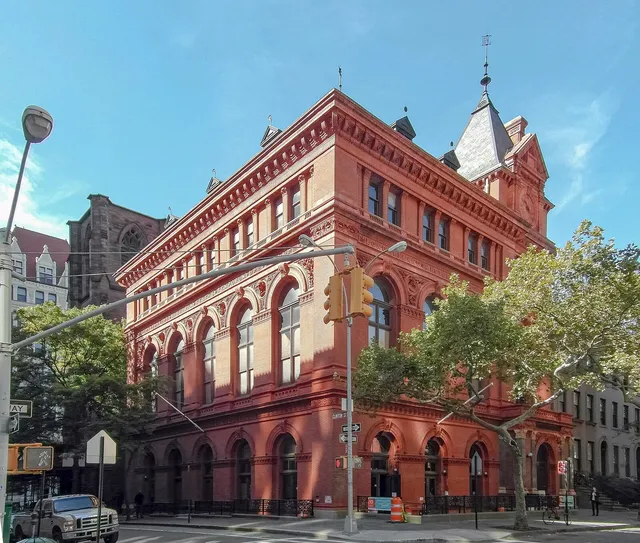 Field Trip 2 · Saturday, 6 March 2027The Center for Brooklyn HistoryThe Center was the Brooklyn Historical Society until 2020.128 Pierrepont Street, Brooklyn, designed by George B. Post and completed in 1881. Photo: “Brooklyn Historical Society” by Reading Tom, 2012, CC BY 2.0. · Source
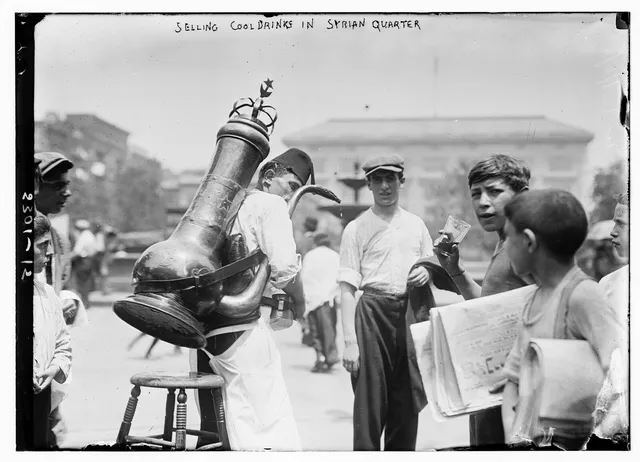 Field Trip 3 · Saturday, 17 April 2027A walking tour in Little SyriaSelling cool drinks in Syrian Quarter (NYC), about 1910. Bain News Service; Library of Congress. Public domain. · Source
Hands-on Archives
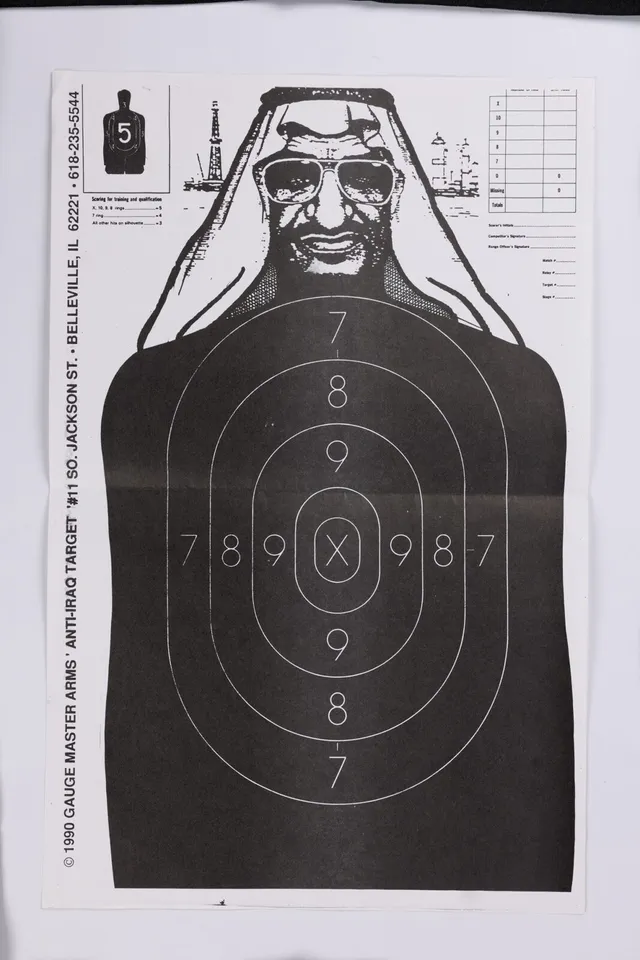 Hands-on Archive 1 · Session 07The Jack Shaheen ArchiveDate TBDGauge Master Arms Anti-Iraq Gun Club Target, 1990. From the Jack G. Shaheen Papers; Tamiment Library/Robert F. Wagner Labor Archives, New York University. Photograph by GION STUDIO, via Choice360. Shown for teaching under fair use (17 U.S.C. § 107). · Source
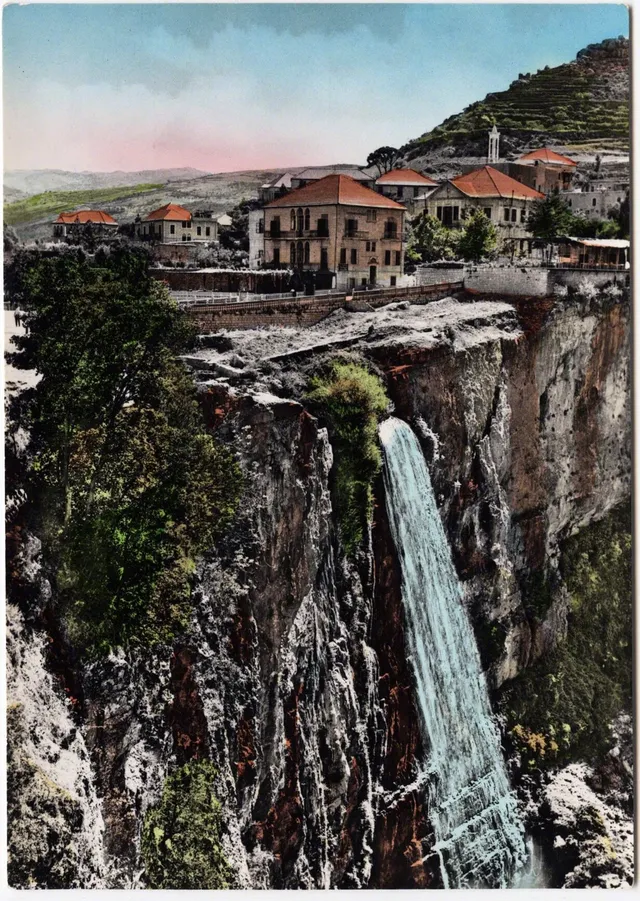 Hands-on Archive 2 · Session 10View from the ViewDate TBDDjizzin Waterfall and Village, circa 1950–1965. View from the View. · Source
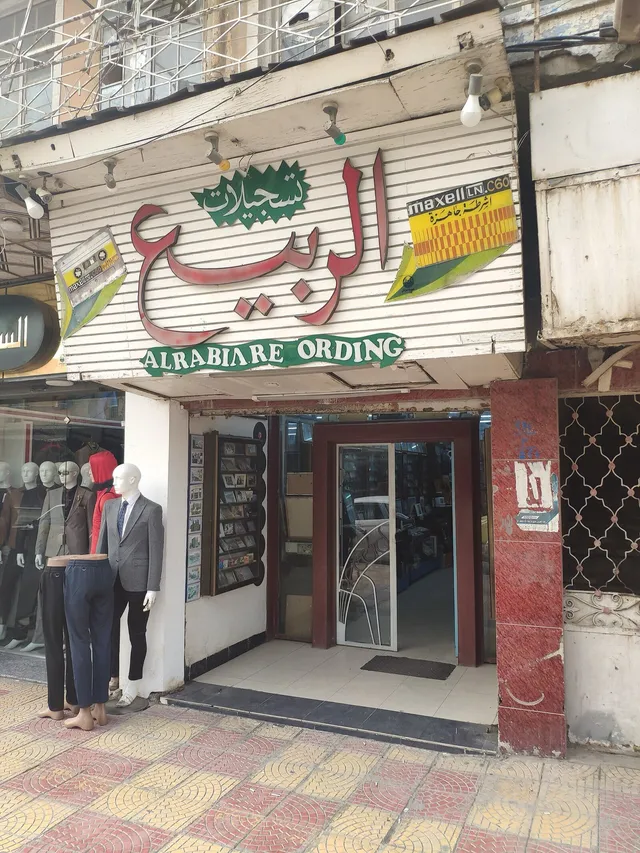 Hands-on Archive 3Iraqi Cassette ArchiveDate TBDTasjilat al-Rabi’, a recordings shop in Dawwasa, Mosul, 2024. Photo: الدبوني, CC BY-SA 4.0. · Source
Archives in Dialogue
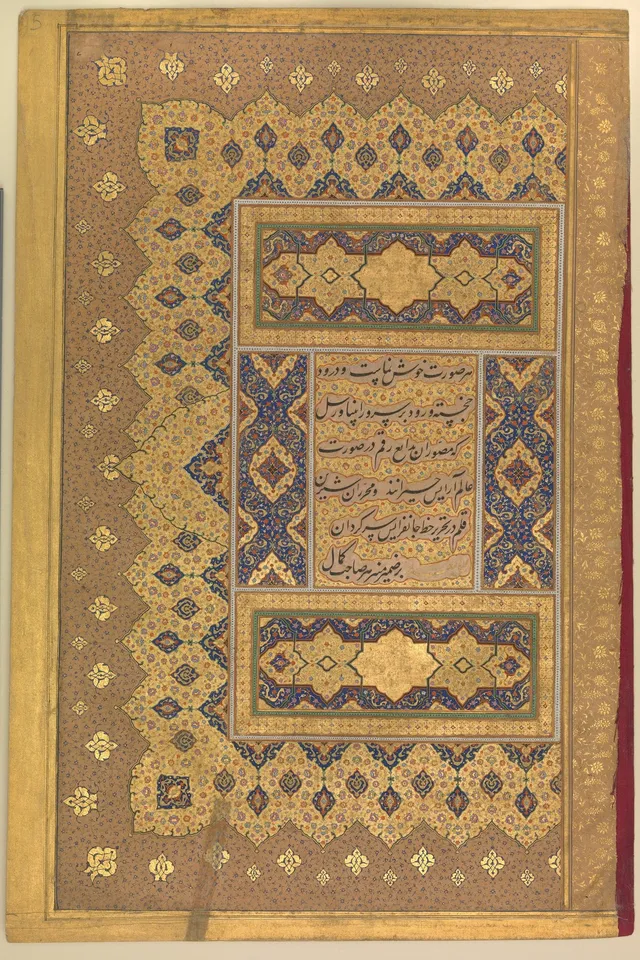 Archives in Dialogue Event #1Spring Event 1Date TBDUnwan, folio from the Shah Jahan Album, India, about 1630 to 1640. The Met, CC0. · Source
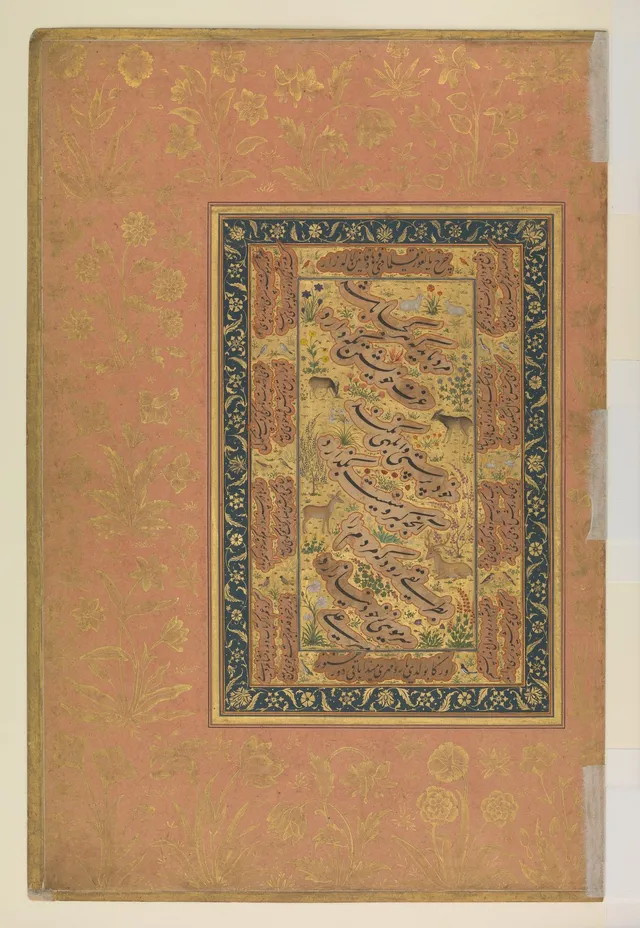 Archives in Dialogue Event #2Spring Event 2Date TBDPage of Calligraphy Illuminated with Animals and Plants in a Field of Flowers, folio from the Shah Jahan Album, India, 16th and 17th c. The Met, CC0. · Source
Taught by
Roxana-Maria Arăș
Faculty Fellow and Clinical Assistant Professor
Kevorkian Center for Near Eastern Studies, New York University
Roxana-Maria Arăș is a Faculty Fellow and Clinical Assistant Professor at the Hagop Kevorkian Center for Near Eastern Studies at NYU, with a doctorate from the Interdepartmental Program in Anthropology and History at the University of Michigan and a Certificate in Museum Studies from the same institution. She works on Eastern Christianity, sectarianism, and urban life in Lebanon, and her museum training has taken her into collections work with the Arab Image Foundation in Beirut and the Arab American National Museum in Detroit, two archives this seminar treats as case studies.
Jared McCormick
Clinical Associate Professor
Kevorkian Center for Near Eastern Studies, New York University
Jared McCormick is Director of Graduate Studies and Clinical Associate Professor at the Hagop Kevorkian Center for Near Eastern Studies at NYU. He completed a PhD in Social Anthropology with a secondary degree in Critical Media Practice at Harvard, and an MA at the American University of Beirut. His research covers tourism and the imagination of place across the Middle East, and visual and digital method is central to his teaching and his own work, most recently a machine-assisted catalog of thousands of Lebanese/Syrian postcards.